
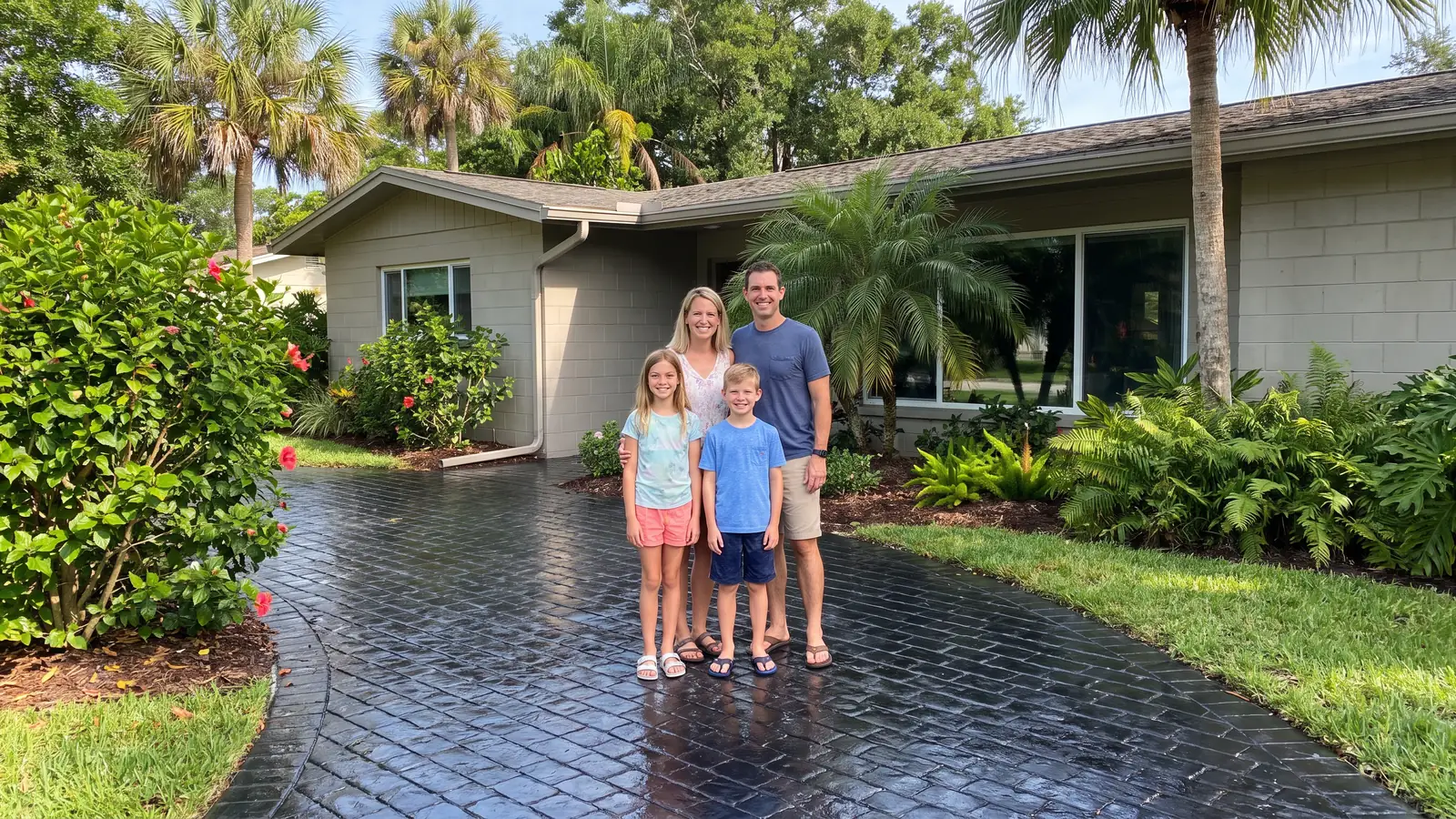
Paver sealing for Panama Park homes
Paver Sealing in Panama Park, FL
Between the Trout River and Main Street, a long Panama Park front walk gets a free sealing estimate at (904) 901-6561.
- Brings out deeper paver color
- Fresh joint sand helps lock pavers in place
- Gives weeds less room to grow
- Makes the surface easier to keep clean
- Free estimate, no obligation
Request a Free Estimate
Free, no obligation.
Fast, careful paver sealing in Panama Park
If you live in Panama Park and your pavers look tired, paver sealing is available and a free estimate is one call away. A local contractor cleans, re-sands and seals driveways, front walks and patios between Main Street and the Trout River. If you call (904) 901-6561, the answer comes within 1 business day, and usually much sooner.
Maybe your front walk has gone green where the magnolia shades it, and weeds have found the joints. With a wash, fresh joint sand and a new coat, it can look like one even color again. If you would rather type than talk, you can send a quick request and name your street. Nothing is owed for the estimate, and the choice to proceed stays with you.
Why hire a local paver sealing contractor in Panama Park?
Panama Park sits between the Trout River and the St. Johns, with old street trees and a railroad running through the middle. A local contractor allows for all three, so send a quick request and ask what they mean at your address. Tell them which of those is closest to you.
Look first, decide later
Someone walks your Panama Park pavers, writes up the job and gives you the price. Saying yes is up to you.
A known range
The Northeast Florida range is published for anyone to see. Compare your Panama Park quote to the figures below.
Long front walks
Early deeds here set homes at least 25 feet back from the street, so front walks can run long. More length means more square feet.
Your finish, your date
Pick matte or wet look, then choose a day that fits your week. A Panama Park estimate carries no obligation.
Get Your Free Estimate in Panama Park
Tell us about your pavers in Panama Park.
Free, no obligation
What paver problems show up most in Panama Park?
Leaf stains under old street trees
An early sales description of Panama Park counted over 8,000 street trees, including magnolias, oaks and cedars. A paver company serving nearby St. Johns County says leaf tannins, mildew and tree cover create different needs than an open-sun driveway. A walk under those branches can stay damp and dark. That means the wash may take longer than it would on a sunny drive. Leaves also collect in joints and along edges. Have the contractor start with the shadiest stretch. Magnolia and oak shade is common on the older streets, so check how much of your walk stays shaded.
Cloudy sealer on damp pavers
A Jacksonville paver company says nearly every complaint about sealer turning white traces to sealing damp pavers or laying it on too thick. The Trout River is about half a mile wide at Main Street, and Jacksonville's humid summers bring heavy downpours. Patience is part of the job in a place like this. A careful contractor waits for a dry surface. The fix is to wait, so ask how the contractor decides a surface is ready. A Jacksonville cleaning company lists trapped moisture and over-application among the usual causes. The lower Trout River is brackish and reaches 0.6 miles across at its widest, so the water is never far from this neighborhood.
Front walks pushed back from the street
Early deeds for Panama Park required homes to sit at least 25 feet from the street. That setback leaves room for a longer front walk or a deeper drive. A longer run has more joints where sand can leave. It also adds square feet to the quote, so measure early. Even a rough guess at the length helps the contractor judge whether yours is a small job or a big one.
Mixed history beside old brick
Along 44th Street, just south of Panama Park, most homes are brick, and the Oakwood Street area has historic houses. Pavers beside older homes may have been sealed by several owners over the years. Mixed work can mean mixed products. Because water-based sealer cannot sit over solvent-based sealer, someone has to identify what was used before. A receipt, an old bucket label or a neighbor's memory of who did the work can help. If nobody knows, the contractor can plan for the worst case. Ask neighbors if they know the contractor who did the nearby walks.
Joint sand that follows the rain out
Jacksonville averages about 52 inches of rain a year, mostly from May to September in brief, intense downpours. One Jacksonville company reports that summer downpours flush sand from unsealed joints. Once the joints open, soil can settle in and weeds can start. Refilling the joints before sealing puts the sand back where it belongs. A Jacksonville company also says a sealed surface rinses off instead of needing pressure-washing, which makes later cleaning easier. Tell the contractor if sand keeps disappearing in the same spot.
Does it matter which side of the railroad my Panama Park home is on?
A little, because the CSX railroad splits Panama Park in two, and each side has its own feel. Along 44th Street, just south of Panama Park, most homes are brick. The Oakwood Street area, bounded by Main Street, East 63rd Street and the railroad, has well-kept historic houses. When you send a quick request, tell the contractor which side of the tracks you live on.
Evergreen Avenue was the early shopping center, and the developer began selling lots in 1910. The city bought ten acres in 1929 for the park at 6912 Buffalo Avenue. That park is an easy landmark to name, so call (904) 901-6561 and tell the contractor how close you are. Culver Elementary, with its twin towers, is another easy way to place your block.
Early deeds set homes at least 25 feet from the street, which is why front walks and drives can run long. Longer runs mean more square feet and more joints to refill. If you are not sure how much you have, send a quick request and the contractor can measure it. Mention it if your walk bends around a tree or a gate, since that changes the work.
What does paver sealing cost in Panama Park?
Around Northeast Florida the usual published figure is $1.75 to $3.25 per square foot to clean, sand and seal. In Panama Park, shade growth under old trees and a failed old coat can push a job higher in that range. A long front walk adds area too. To get a figure for your own walk and drive, send a quick request.
Layout counts as well. Safe Touch's price page says strip and reseal costs more when the old coat has failed, and a Jacksonville cost guide says gates and tight side yards add prep time. A corner lot with a long side path may take more time than a deep, open drive. Call (904) 901-6561 and describe where your pavers are.
| Paved area | Typical example | Clean, sand and seal |
|---|---|---|
| 300 sq ft | Small patio or walkway | $525 to $975 |
| 600 sq ft | Two car driveway | $1,050 to $1,950 |
| 1,000 sq ft | Large driveway or pool deck | $1,750 to $3,250 |
| 1,500 sq ft | Driveway plus pool deck | $2,625 to $4,875 |
Math based on the $1.75 to $3.25 per square foot that Northeast Florida paver companies publish. Your contractor sets the actual price after seeing the surface. Repairs, leveling and stripping failed sealer are usually extra.
How does a paver sealing job work in Panama Park?
Check the shade and the slope
The contractor starts by looking at where your Panama Park pavers get sun and where trees hold moisture. Low spots and lifted edges are marked, because sealing over a dip only preserves it. A surface sealed in the past brings its own questions. If the old coat is solvent-based, a water-based sealer cannot go over it. Bring up any spot where water stands after a storm.
Wash off the leaf stains and film
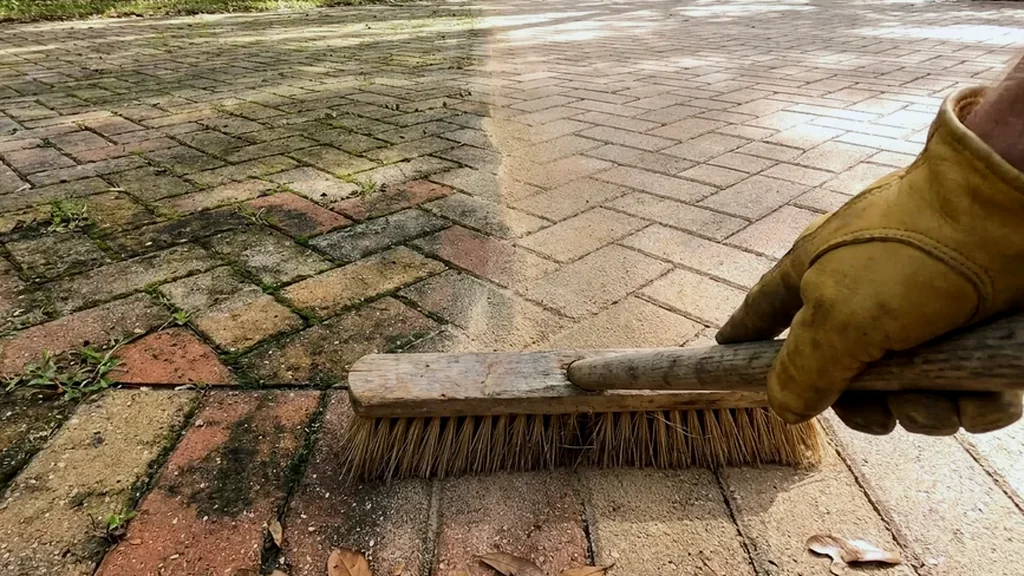
Cleaning lifts green film, leaf marks and dirt. Rinse water stays off older brick and trim beside the pavers. That matters on historic homes near Oakwood Street. Washing also carries joint sand away, so the sand step is next. Rust and oil marks are treated first, and a Jacksonville company notes that some deep stains will not come out completely. A soft rinse beside old brick helps protect the mortar. The area also has a long brick story, since the region's first brick kiln opened at Panama Park.
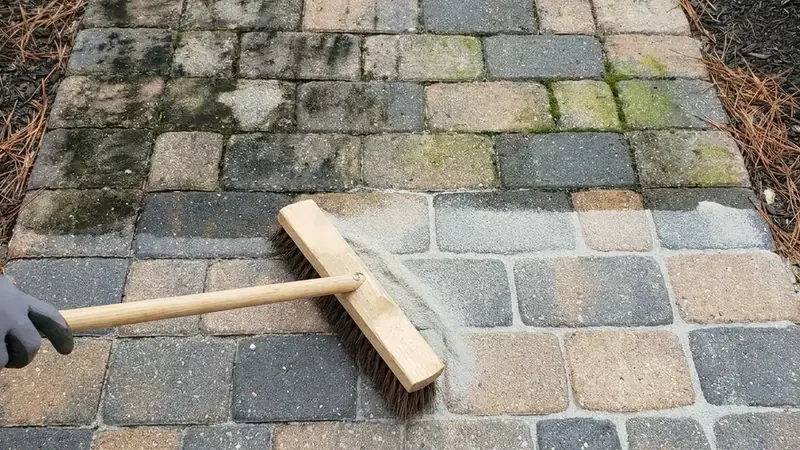
Sand the joints back to the top
Fresh sand goes into each joint, and the surface is swept clean. Jacksonville's summer storms are brief and hard, so full joints hold up better than low ones. Sealer applied afterward helps lock the sand in place. A long front walk has many joints, so this step takes patience. If the sand has been missing for a long time, expect this step to take longer.
Hold off until the surface is dry
Sealer on damp pavers can turn cloudy, which is the white haze many owners complain about. Jacksonville's rain is concentrated from May to September, so the contractor watches the forecast. A walk under old trees can take longer to dry than an open drive. It is better to wait than to seal early. If rain interrupts the job, ask how the day would be rescheduled. Ask the contractor how long a shaded walk usually needs.
Seal it and set the wait
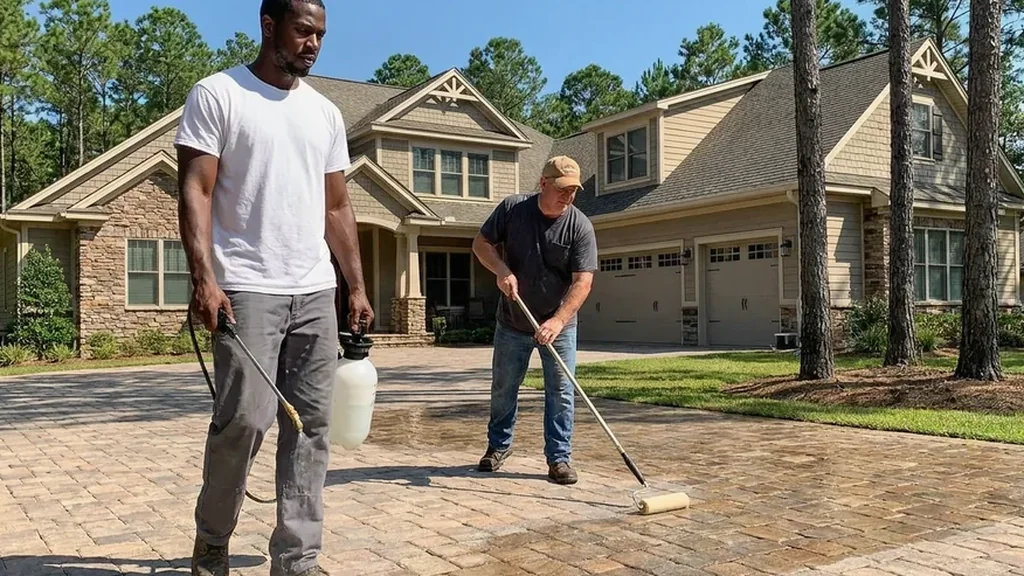
Sealer is sprayed and then back-rolled, which spreads it evenly and works it into the joints, according to one Jacksonville company. Walking on it is usually fine within hours, and cars need about a day. Quoted spans run two to five years from coat to coat. Ask which finish fits your home. Ask the contractor to write the product name down for your records.
Complete paver services in Panama Park
A Panama Park job starts with a wash and ends with sealer, with fresh joint sand in between. The surface has to dry before the last step. Sealer over dirt or dampness locks the problem in. To hear how long each step takes on your lot, call (904) 901-6561.
Front walks, driveways and back patios wear differently here. Walks under old trees stay damp and green, drives take tires, and patios catch sun and leaf drop. Tell the contractor which surfaces you want done when you send a quick request. A side path to the back yard counts as a walk too, so mention it.
Matte keeps the natural look, and wet look deepens the color but shows scuffs sooner. Sealers are either film-forming, which sit on top, or penetrating, which soak in. A paver company serving nearby St. Johns County notes that leaf tannins, mildew and tree cover create different needs than an open-sun drive, so the finish should fit your shade. Call (904) 901-6561 to talk it over.
Jacksonville's wet season runs from May to September, so a Panama Park date may slide a day or two. Low yards near the water may take longer to dry. Other months usually leave more open days. To find a date that suits you, send a quick request.
Questions to ask before you hire
- Will my pavers end up the same color afterward, or darker?
- Will I see the measured area and the rate on the quote before I agree?
- Will the finished surface feel slick when it rains?
- Can I leave a key or gate code, or must I be there at the start?
- Do you wash the whole area the same way, or scrub the stained spots by hand?
- Where does the sealer go if it drips onto my shrubs or into the pool?
- Does the sealing come with a written warranty, and who stands behind it?
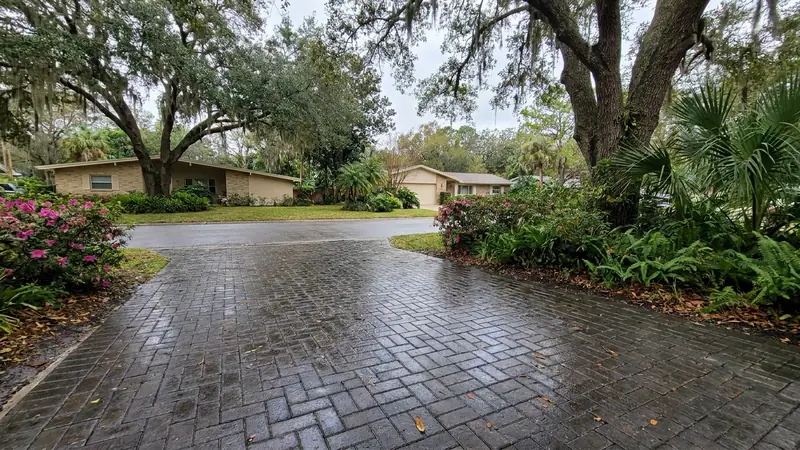
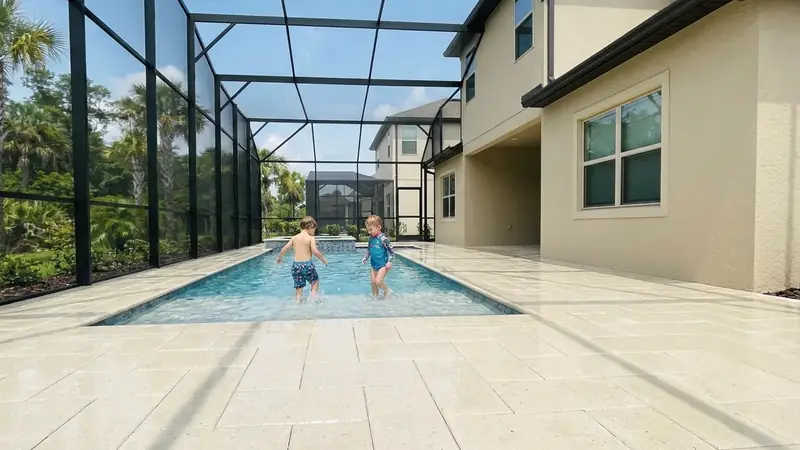
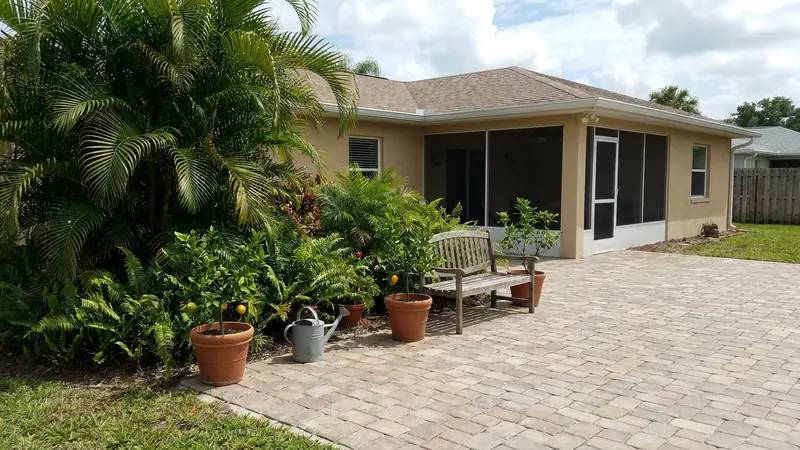
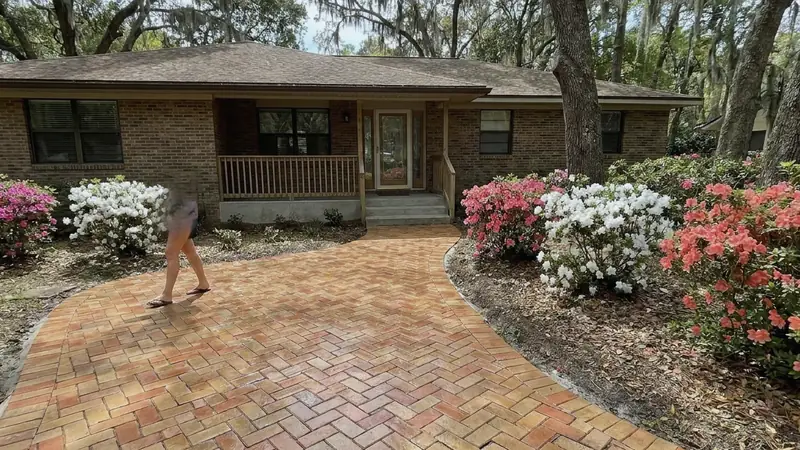
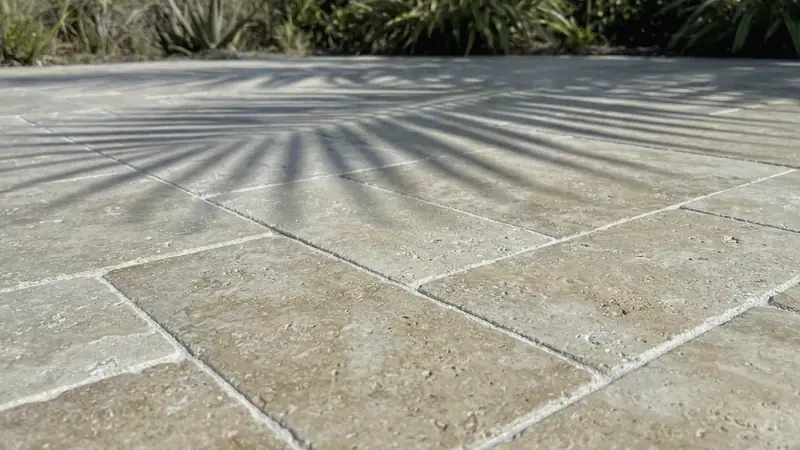
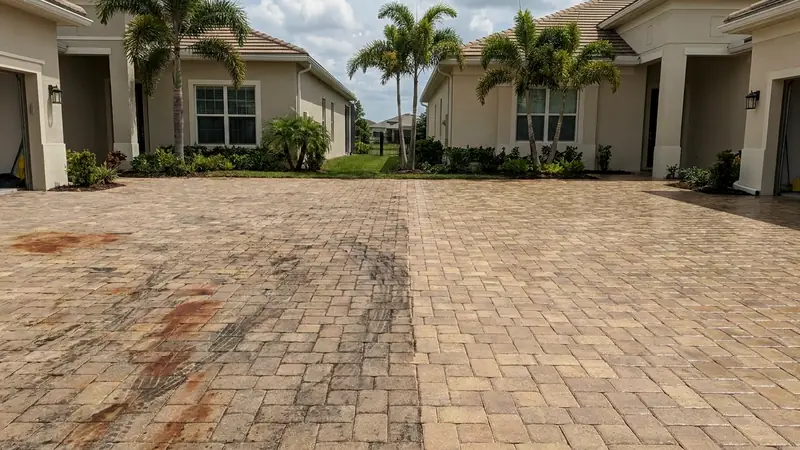
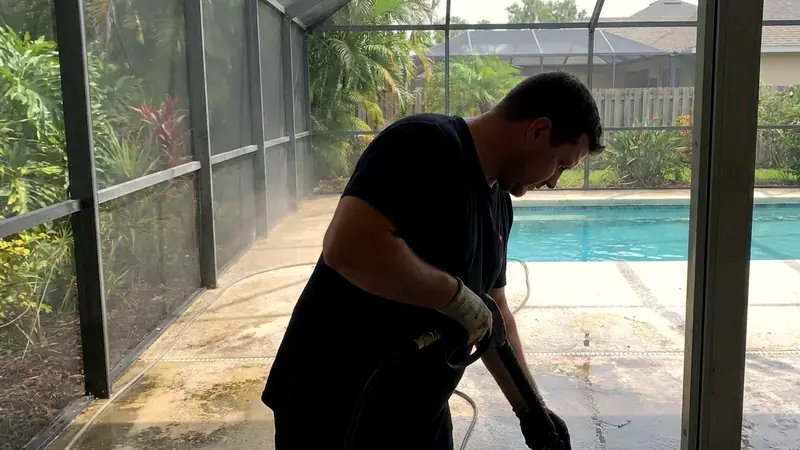
What do sealed pavers look like around Panama Park?
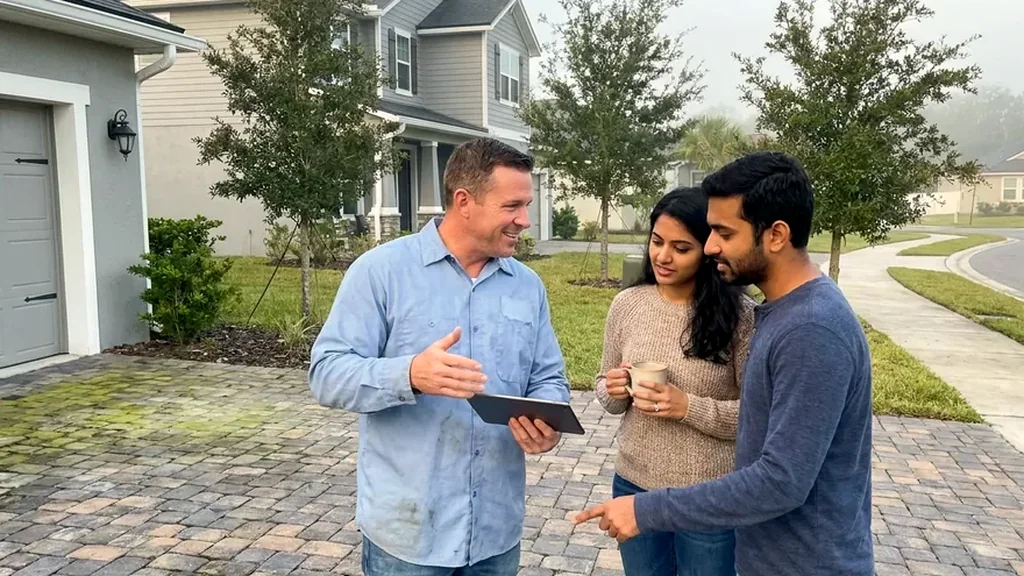
Why local matters in Panama Park
A contractor who works Panama Park knows how wet the low streets near the Trout River can stay. That shapes the dry window before any sealer goes on. A company from far away may never think to check. Call (904) 901-6561 and mention if your yard holds water.
Local also means knowing the layout. A railroad splits the neighborhood, and early deeds pushed homes back 25 feet. A contractor used to that plans for long walks and tight routes. You can send a quick request and describe how the crew would reach your back patio.
Historic homes near Oakwood Street and brick homes near 44th Street call for gentle rinse water. A contractor who has worked these blocks keeps spray off old mortar and trim. That care is worth asking about up front. If that sounds like your house, send a quick request.
Which Panama Park landmarks can I name when I call?
Name the park, the school or the river, whichever is closest. The city bought ten acres for Panama Park at 6912 Buffalo Avenue in 1929. Culver Elementary opened in 1916 with two towers topped by terracotta eagles, designed by Henry Klutho. Mention either one and send a quick request.
The Trout River is about 20 miles long and runs entirely within Jacksonville's Northside. The Bert Maxwell Boat Ramp at 500 Maxwell Road opened in 1961. Panama Park was a sawmill town first, since Cummer Lumber Company started there in 1896. Call (904) 901-6561 and say which landmark is nearest.
Frequently Asked Questions
What is the going rate per square foot for sealing pavers in Panama Park?
Expect $1.75 to $3.25 per square foot to clean, sand and seal, per the Northeast Florida range companies publish. Pavers with a failed coat cost more because the coat has to come off. List the total square feet in the quote and compare it to that range. Pool decks and side walks usually count in the same total, so list every surface you want done. That range is a published figure, not a promise, so the written estimate is what counts.
Is it better to spray or roll paver sealer in Panama Park?
Most professionals do both. One Jacksonville company says crews typically spray sealer and then back-roll it for even coverage and to work it into the joints. Ask the contractor how the coat will be applied to your walk. Ask whether the quote includes both steps and which product will be used. Spraying covers the surface, and rolling spreads the coat evenly and works it into the joints. Many Panama Park walks are long, so the back-roll step takes real time.
Which paver sealer works for Florida pavers in Panama Park?
It depends on what is already on the surface. A water-based coat cannot be laid over a solvent-based one, so the old product comes first. After that, film-forming sealers sit on top and penetrating ones soak in and keep the look unchanged. Ask the contractor to name the product, and keep that name for next time. Matte or wet look is a second choice that comes after the type is settled.
Why do pavers turn white after sealing?
A Jacksonville cleaning company says white pavers usually come from trapped moisture, failed sealer, over-application or poor prep. Another says nearly every complaint traces to sealing damp pavers or laying it on too thick. A dry surface and a thin coat avoid most of it. If a coat has already clouded, it may need to be stripped, which costs more, so ask about that early. Thin coats on dry pavers are the rule, according to those companies.
How long does sealer last on Panama Park pavers?
Quotes usually land between two and five years per coat. Heavy shade and daily tires can pull a Panama Park walk toward the short end. On a Panama Park drive, a wet look will scuff sooner than matte. Ask what finish the contractor would pick for your shade and traffic. Ask when the last coat went on, if you know.
Do leaf stains under Panama Park trees come off before sealing?
Cleaning removes surface film and many marks, but some deep stains may not come out completely, according to one Jacksonville company. The wash comes first so the sealer does not trap anything. Ask the contractor what can be expected on your walk. Mention which walks sit under trees so the wash can be planned. Sealing locks in whatever is left, so cleaning comes first. Leaf drop is steady under magnolias and oaks, so the wash is the step to watch.
Is paver sealing worth it in Panama Park?
For most owners it is, because sealer helps hold joint sand and makes the surface easier to rinse later. The downsides are coat upkeep over time and the wait for a dry day. Panama Park's heavy summer rain makes joint sand the main reason to seal. Ask what the quote covers so you can compare it with another. Ask what the contractor would do about missing sand before sealing.
How long until I can drive on sealed pavers in Panama Park?
A Jacksonville company says you can usually walk on it within hours, with cars kept off for about a day. The sealer and weather change that. Confirm the exact wait when you book. Plan around that wait if you expect visitors or deliveries. The same company says to plan on about a day for cars, so move them before the work starts.
Nearby areas we serve
Ready for a Free Estimate in Panama Park?
Call (904) 901-6561 and tell us about your pavers.
Free, no obligation