
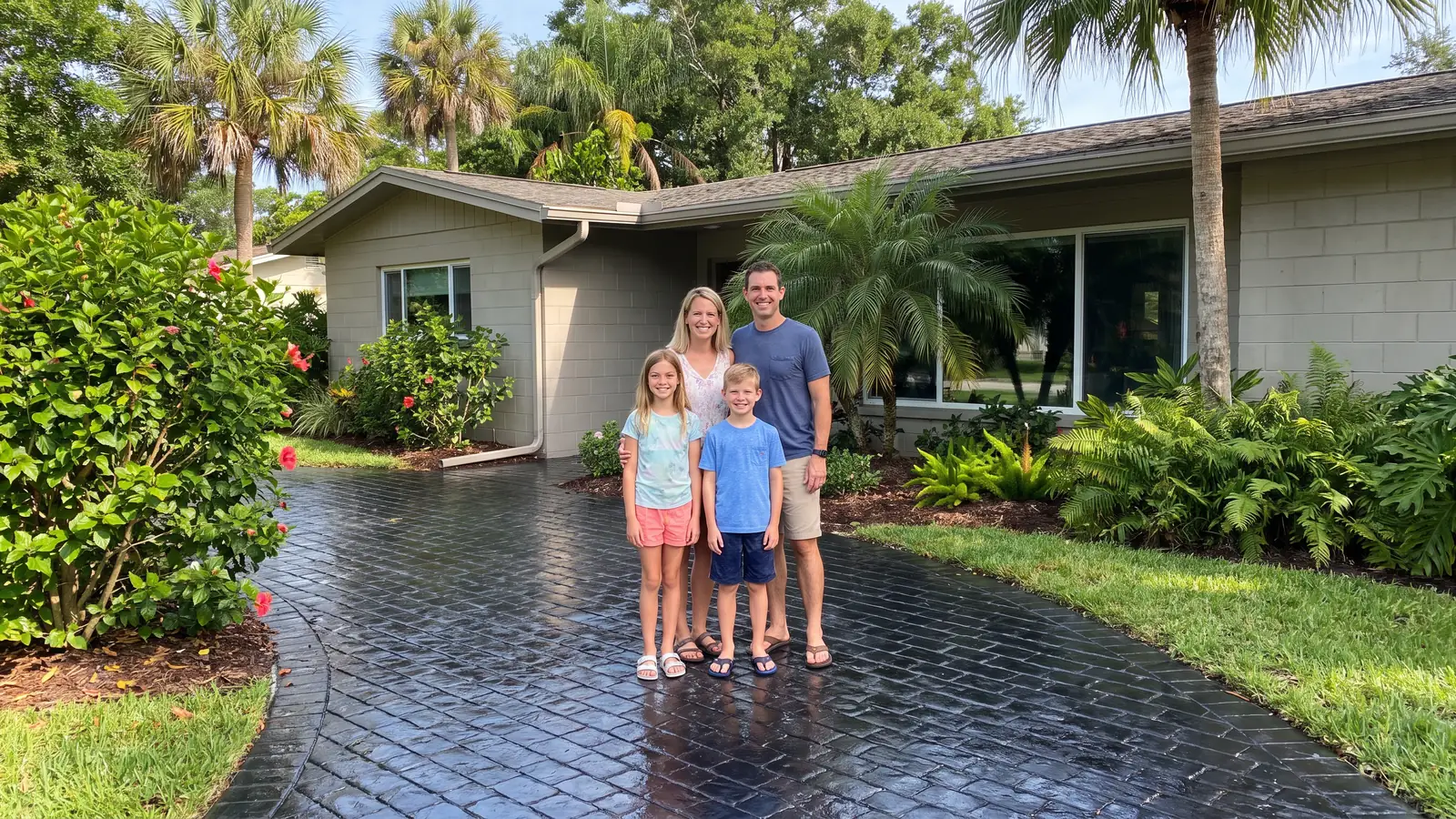
Paver sealing for San Jose homes
Paver Sealing in San Jose, FL
Paver sealing for San Jose driveways and walks under the oaks, with a free estimate when you call (904) 901-6561.
- Brings out deeper paver color
- Fresh joint sand helps lock pavers in place
- Gives weeds less room to grow
- Makes the surface easier to keep clean
- Free estimate, no obligation
Request a Free Estimate
Free, no obligation.
Fast, careful paver sealing in San Jose
San Jose homeowners can get paver sealing from a contractor who works this side of Duval County, with a free estimate before anything starts. The job covers driveways, walkways and patios, from the streets off San Jose Boulevard to the riverfront lots. Whenever you are ready, send a quick request, and a reply comes within 1 business day, usually much sooner.
Picture the front walk you see every morning: gray at the edges, a green streak where the oak shade never dries, weeds in the joints. After a wash, new sand and a fresh coat, the same walk comes back as one even color. To describe your own pavers to a person first, call (904) 901-6561.
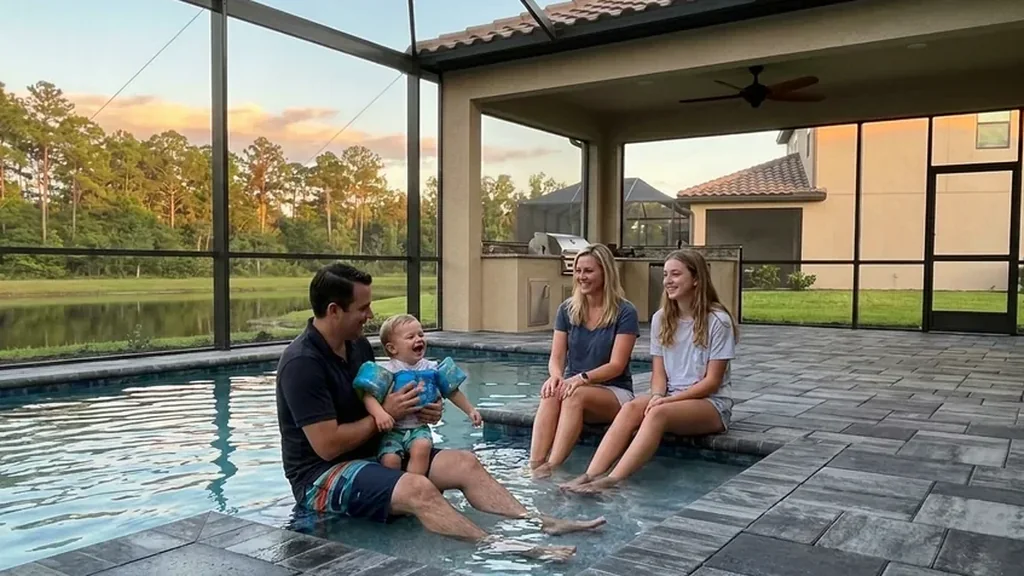
Why hire a local paver sealing contractor in San Jose?
San Jose lots mix big oaks, river air and homes from several decades, so one fixed routine rarely fits them all. A local contractor can look at your yard and tell you what it needs, so send a quick request to set that up.
Estimate before anything else
The contractor stands in your San Jose yard, measures what you want sealed and puts a price on paper. Saying no afterward is fine.
Judging a quote without guessing
Regional prices are published, so you can judge a San Jose bid without guessing. Ask to see yours against that range.
A finish that suits the house
Matte sits quietly beside a Spanish Revival front. A wet look gives more shine but shows scuffs sooner.
Plans for oak shade
Walks under big oaks need extra wash time, and a local contractor builds that into the plan from the start.
Get Your Free Estimate in San Jose
Tell us about your pavers in San Jose.
Free, no obligation
What paver problems show up most in San Jose?
Green film under the oaks
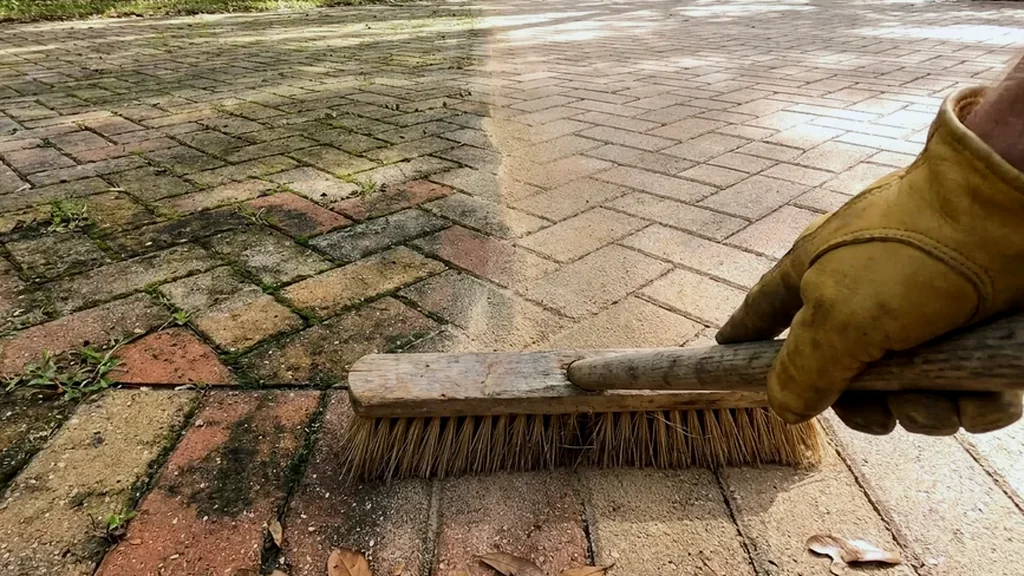
Wikipedia describes most San Jose homes as having lawns and flower beds under large oaks with moss hanging from them. That shade is part of the neighborhood, not a one-lot quirk. Moss and algae should not grow on pavers unless the spot is heavily shaded, and treatments do little where pavers stay damp. A walkway that never sees afternoon sun is where the green shows first. One Jacksonville company says sealing adds a barrier against moisture, stains and UV, so a clean walk stays cleaner longer. Picture that front path in one even tone instead of a green stripe.
Damp pavers in the wet months
Jacksonville gets about 53 inches of rain a year, and June through September average near 7 inches a month. Humidity stays around 76 percent, so even a sunny day may not dry a shaded walk. Sealer needs a dry surface, which means a job planned for a rainy week may slide a day or two. A local paver company warns against sealing a damp surface or sealing just ahead of a downpour. The contractor checks several spots, not only the open driveway, and a short wait costs less than a cloudy coat that has to be redone.
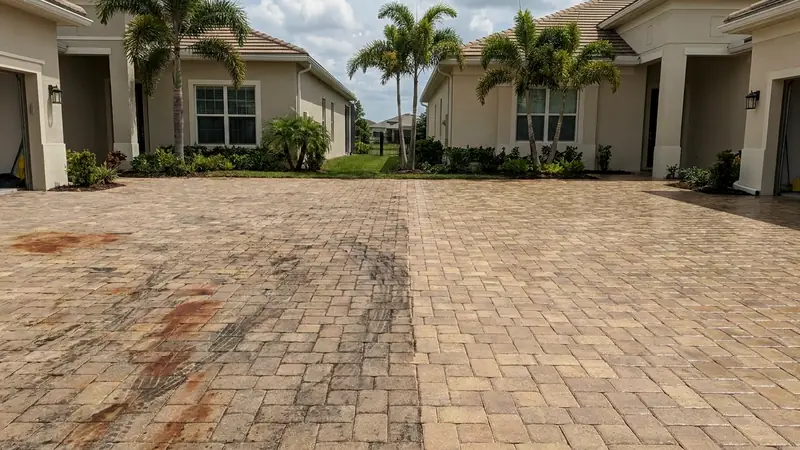
Orange stains from lawn water
San Jose homes tend to have grass, shrubs and flower beds, and those need watering. Florida well water is often high in iron, and iron in irrigation water leaves orange stains. Rust often shows up as a line along the edge nearest the lawn or beds. The original plan gave every street a paved sidewalk, so where your front path meets a lawn bed, watch for that line. Mention where your sprinkler heads sit and what water feeds them. Rust is treated as its own step before the sealer goes on.
Coats left by earlier owners
The neighborhood runs from 1920s Mediterranean Revival homes to postwar ranches and newer builds. A 1947 re-platting brought postwar subdivisions, so paving at a ranch from that era may be decades newer than the house. A paver area may have been sealed once or never. Water-based sealer cannot go over solvent-based, so whatever is down now decides which product can follow. Dull, chalky patches and water that soaks in instead of beading are clues. A receipt or a photo from an old job helps, and the contractor can test a small spot.
Joint sand lost to summer downpours
Brief, heavy rain is common in summer, and it carries joint sand along with it. Wider joints let soil settle in and give weeds a start, and a joint that has dropped below the paver edge collects dirt more easily. Washing removes still more sand, so the joints get filled again before the coat goes on. Refilling brings each seam level and leaves weeds less to root in. That is why re-sanding belongs in the job and is not an optional extra. If you see a bare line of soil between pavers, that is the cue.
Do San Jose's older and newer streets need different paver care?
Yes, since San Jose was built in layers over many decades. The 1920s plan gave the neighborhood Spanish street names and a paved sidewalk on every street, which was rare for Florida suburbs then. Only a fragment of that plan was finished before the boom ended, and a 1947 re-platting brought postwar homes to the rest. If your pavers sit at a 1920s Spanish-style house, call (904) 901-6561 and ask how the contractor protects older stucco and stone.
Away from the river the lots are smaller, and a front walk and a short driveway may be most of the paving. Those small areas still hold shade and moisture, and they sit close to the house. The contractor can keep rinse water off siding and plant beds more easily when the job is compact. If that describes your lot, send a quick request and mention the layout.
Closer to the water, the properties are larger and the paving often runs longer, with a back patio or pool deck added to the driveway. Bigger areas take more hours and more sealer. The total depends on how many square feet get measured, so give the contractor every surface you want covered when you send a quick request.
What does paver sealing cost in San Jose?
Published prices in this region run from $1.75 to $3.25 per square foot for a clean, sand and seal job. Where a San Jose quote falls in that range depends on shade growth, how much joint sand is gone and whether old sealer is on the surface. For a number that fits your pavers, send a quick request.
Layout counts too. A front walk plus a short drive is a smaller total than a long drive, a patio and a pool deck on a riverfront lot. Have the quote list every area and its size. You can also call (904) 901-6561 to talk through what applies to your property.
| Paved area | Typical example | Clean, sand and seal |
|---|---|---|
| 300 sq ft | Small patio or walkway | $525 to $975 |
| 600 sq ft | Two car driveway | $1,050 to $1,950 |
| 1,000 sq ft | Large driveway or pool deck | $1,750 to $3,250 |
| 1,500 sq ft | Driveway plus pool deck | $2,625 to $4,875 |
Math based on the $1.75 to $3.25 per square foot that Northeast Florida paver companies publish. Your contractor sets the actual price after seeing the surface. Repairs, leveling and stripping failed sealer are usually extra.
How does a paver sealing job work in San Jose?
Look the lot over
The contractor spends a few minutes at your San Jose property noting where water leaves the pavers and where oak shade keeps them damp. Any dip or lifted corner is flagged for repair, since a coat of sealer preserves whatever it covers. If the pavers were sealed before, the contractor wants the product name. You cannot put a water-based sealer over a solvent-based one. Ask the contractor to check the walk to the front door too, since sidewalks were part of San Jose's original plan. The visit is free, and you decide afterward whether to move ahead.
Clear the green and the grime
Moss, leaf stains and road film come off first, and orange rust from sprinkler water gets its own treatment. Rinse water is steered away from flower beds and siding, which matters on a small lot with paving close to the house. Shaded walks may need a second pass. Sap and tannin under the oaks may need a slower pass than road film does. Gentle rinse water matters beside older stucco, which many San Jose houses have.
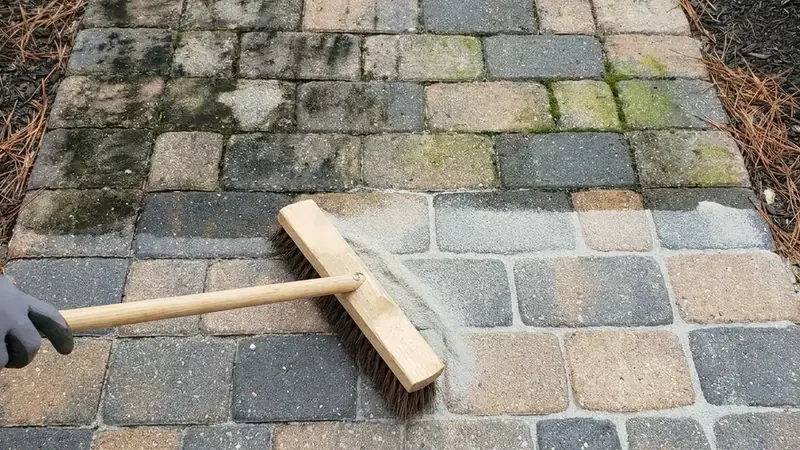
Put sand back between the pavers
The wash pulls out joint sand, so each seam is refilled and the surface brushed clean. Gaps let soil in and give weeds a start. After years of summer downpours, your joints may need more sand than you expect. Low corners near the street are checked closely, since sand tends to leave from there first.
Wait for dry ground
San Jose air holds moisture, and sealer needs a dry surface. The contractor waits it out and steers clear of days with storms in the forecast. One Jacksonville company advises a dry stretch with steady temperatures. That patience is why a job can slide a day. Late-morning sun dries an open drive faster than a shaded walk beside the house, so each area is judged on its own.
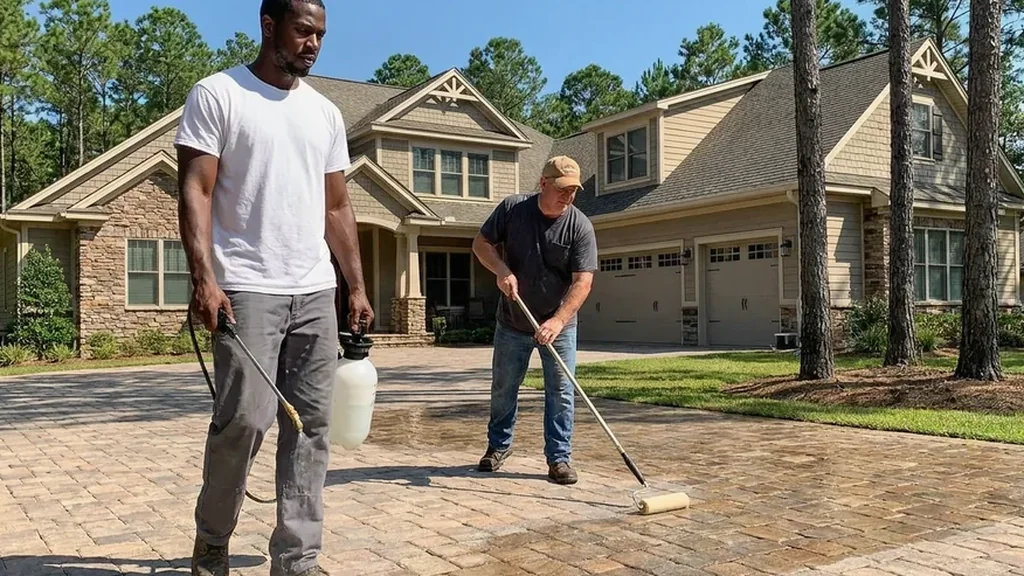
Spray, roll and rest
The sealer goes on by spray, then a roller works it into the joints, which one Jacksonville company says is typical. You will hear when the surface can take foot traffic and when it can take a car. Write down the product name, since the next coat should match it. A matte coat on a front path and a wet look on the driveway are both possible if you like contrast.
Complete paver services in San Jose
Start with the wash. It lifts green film, leaf stains and road dust from the drive, the front walk and any patio. Then new sand goes between the pavers, the surface dries out, and the sealer comes last. If you want to hear how long each stage runs on your lot, call (904) 901-6561.
San Jose lots mix surfaces. A driveway wears from tires, a walk under the oaks stays damp, and a back patio takes furniture and sun. Each gets its own treatment and its own line on the quote. Tell the contractor about every paved spot when you send a quick request.
Sealer choice has two parts: the chemistry and the sheen. Water-based and solvent-based products do not mix, so any coat already down narrows the field. Matte keeps a quiet look beside stucco, while a wet look pops color. Call (904) 901-6561 and ask what the contractor would pick for your house.
Timing is mostly about rain. Pavers have to be dry, and summer afternoons bring sudden storms, so mornings win. Once the job is done, you can watch the surface for dull patches and plan the next coat before the color fades. To find a dry window, send a quick request.
Questions to ask before you hire
- Does the sealing come with a written warranty, and who stands behind it?
- Is a weed killer used in the seams, and is it safe for my dog?
- Can the job be done in sections so I can still park a car?
- Will I see the measured area and the rate on the quote before I agree?
- How often do pavers like mine need a fresh coat in Jacksonville weather?
- If I only want the pool deck done, is that a smaller job with its own quote?
- Is refilling the joint sand after the wash part of the price?
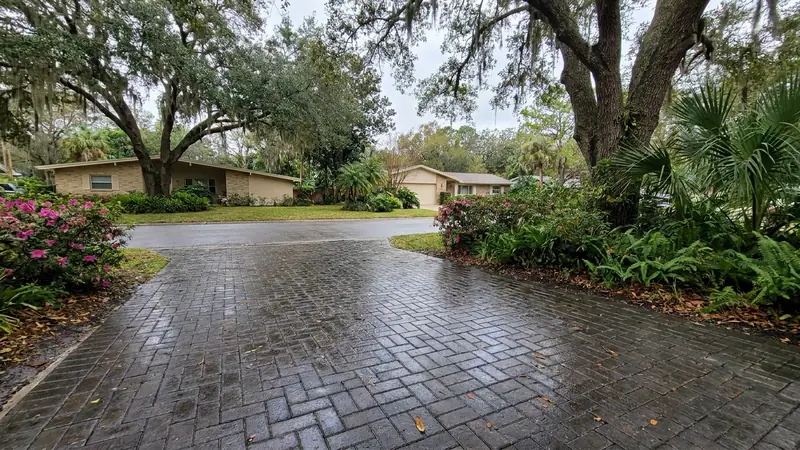
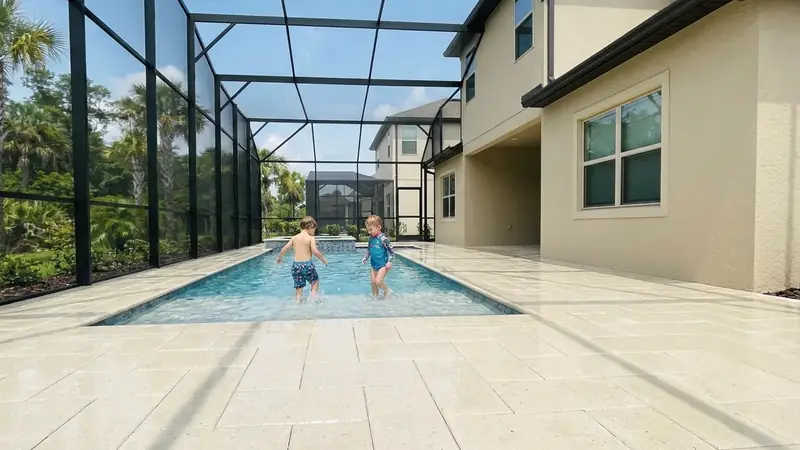
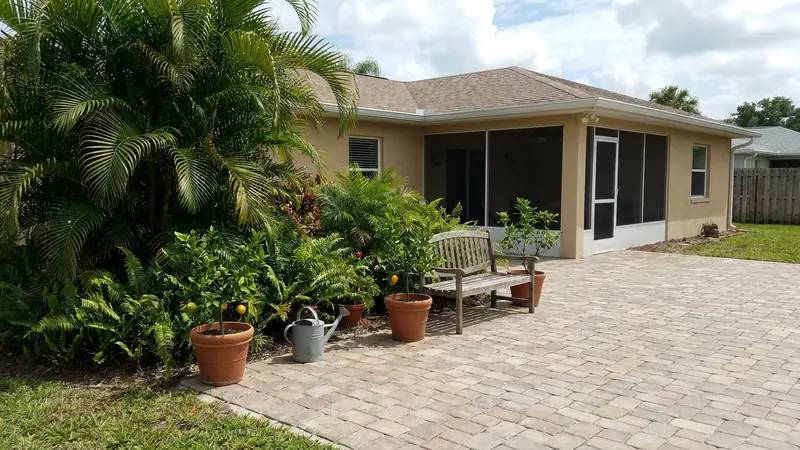
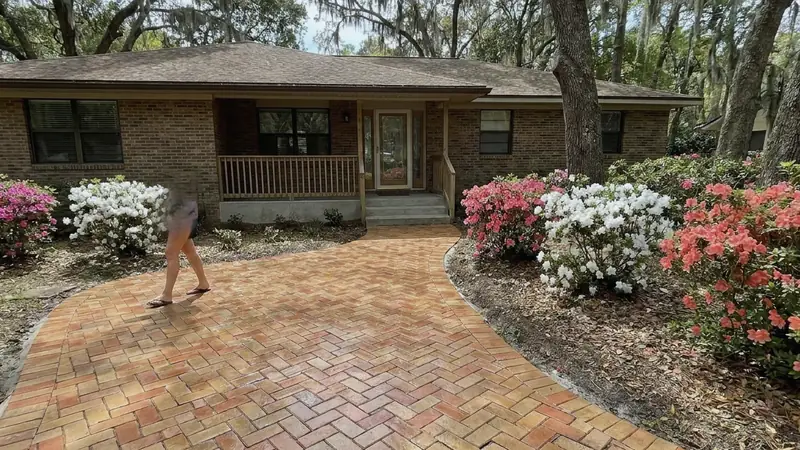
What do sealed pavers look like around San Jose?
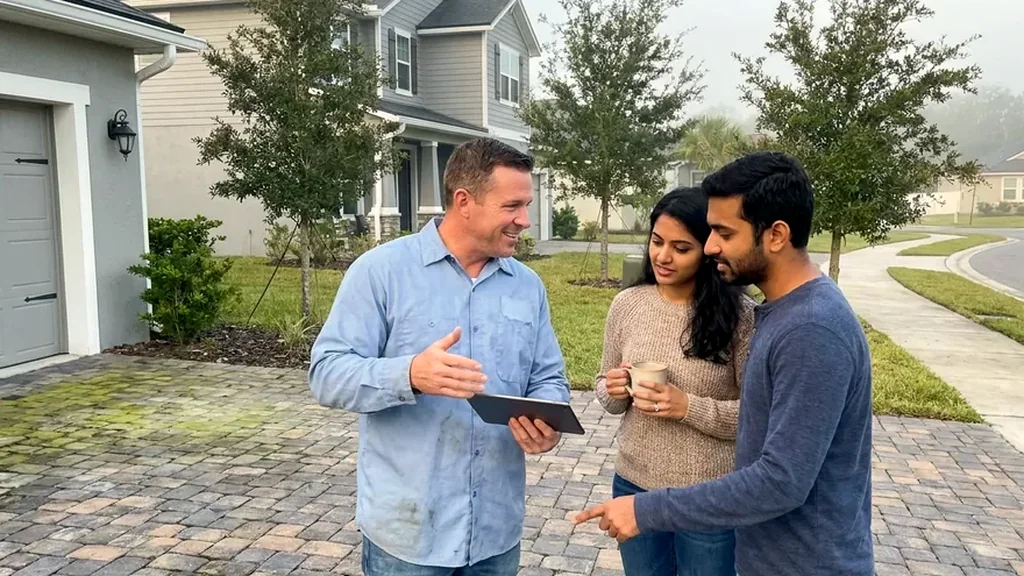
Why local matters in San Jose
A contractor who knows San Jose will ask about the oaks before touching a hose. Shade and moss decide how much washing a walkway needs. A crew that treats every yard alike misses that. For a contractor who works Duval County's Southside, call (904) 901-6561.
Local knowledge also covers the calendar. Summer afternoons bring brief, heavy storms, and a fresh coat cannot take rain too soon. Someone who has worked these streets plans mornings for the sealer and leaves buffer days. Ask about weather plans when you send a quick request.
Houses here come from many decades, and each one asks something different. A stucco front from the 1920s needs gentle rinse water, and a postwar ranch may have a wide driveway with a stained apron. Experience with both saves guesswork. If your house is in that mix, send a quick request and give a rough build year.
What is San Jose near, and does that matter for paver sealing?
San Jose sits along the St. Johns River, near the Bolles School and the San Jose Country Club, and Goodbys Creek marks its southern edge toward Mandarin. Epping Forest Yacht and Country Club is on the river as well. The moisture and tree cover around these places is part of why shade and damp pavers come up so often here. Call (904) 901-6561 to ask how the contractor plans for it.
Parks such as Alejandro Garces Camp Tomahawk Park and Balis Park are scattered through the neighborhood, and large oaks line many streets. Falling leaves and shade mean more cleaning than an open, sunny lot needs. Tell the contractor which side of the neighborhood you live on when you send a quick request.
Frequently Asked Questions
What does paver sealing run per square foot in San Jose?
Published prices in the region run $1.75 to $3.25 for each square foot of cleaning, sanding and sealing. Shade growth, lost joint sand and old coats move a San Jose quote within that band. The quote should show your measured square footage. Ask the contractor to list each area separately, since a walkway and a pool deck rarely take the same prep.
Is sealing pavers worth it in Florida?
Usually, yes. Strong sun and heavy summer rain wear on pavers, and sealing slows fading, stains and sand loss. Under San Jose's oaks it also gives moss and algae less to hold onto, as long as the surface is washed first. Sealing is not a one-time fix, though, and the coat is renewed when water stops beading on the surface.
How long does a coat of paver sealer last in San Jose?
Think in years, not months. Sun, tires and foot traffic set the pace, and walks under the oaks tend to outlast a sunny drive. To test a coat, flick some water onto the pavers. Beading means it is working, and soaking in means it is spent. If your walks stay green under the oaks, they may call for attention sooner than the drive does.
Do pros spray or roll paver sealer?
One Jacksonville company says professionals typically spray first and then back-roll. The spray lays down an even film, and the roller pushes it into the joints. Rolling alone risks lap marks, so ask which method the San Jose contractor plans to use. Ask to see the product name or label if you want to know exactly what is going onto your surface.
Will a rainy week push back my San Jose sealing job?
Sometimes. Sealer needs a dry surface, and Jacksonville's wettest months, June through September, bring afternoon storms. The contractor allows a dry-out day and picks a morning without rain in the forecast. A rain date is easy to set when the pavers are not dry, so raise it when you book.
Do the oaks in San Jose make pavers harder to keep clean?
They can. Shade holds moisture, and moss, algae and leaf stains follow. The wash handles all three, and walks under the oaks may need extra time. Tell the contractor which walks never see sun. Leaves and sap can leave brown marks, and those come off in the wash before any coat goes down.
What if my San Jose pavers were sealed years ago?
That is common, and the old coat matters. A water-based product cannot go over a solvent-based one, so the contractor needs to know what is down. A photo, a receipt or a product name helps. If the old coat has peeled or turned cloudy, say so, because that can change the cleaning plan.
Is a San Jose pool deck sealed differently from a driveway?
Often, yes. A pool deck usually gets a matte or natural finish, and one Jacksonville company says it should carry an anti-slip additive. Mention a deck when you ask for the estimate so the plan fits it.
Nearby areas we serve
Ready for a Free Estimate in San Jose?
Call (904) 901-6561 and tell us about your pavers.
Free, no obligation